


Greece in the Adriatic–Ionian Strategy: A Partner for Integration and Innovation
At the heart of the Adriatic–Ionian macro-region lies Greece —where maritime heritage, culture, innovation, and diplomacy converge. As one of the founding members of the macro-regional strategy for the Adriatic and Ionian Region (EUSAIR), Greece continuously enhances the essence of European integration and cooperation.
Greece actively participates in the EU Strategy for the Adriatic and Ionian Region (EUSAIR), engaging all levels of governance – from technical experts to political leadership – to uphold the values of macro-regional cooperation and cohesion policy.

“Cohesion transforms a macro-region into a unified space of shared responsibility, collective progress and balanced development”
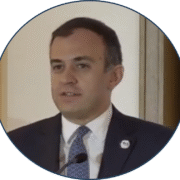
“Our efforts have been guided by a clear and coherent vision for a more resilient, united sustainable Adriatic – Ionian Region”
Greece has played a pivotal role in the EU Strategy for the Adriatic and Ionian Region (EUSAIR), assuming the Presidency twice: in 2016–2017 and again in 2024–2025. During its first Presidency, Greece successfully organized the EUSAIR Forum in Ioannina, dedicated to “Blue Growth,” a strategic priority for sustainable development in the Adriatic-Ionian Region. This initiative fosters innovation, strengthens maritime governance, and promotes sustainable fisheries and aquaculture, contributing to economic growth and resilience across key coastal and marine sectors.
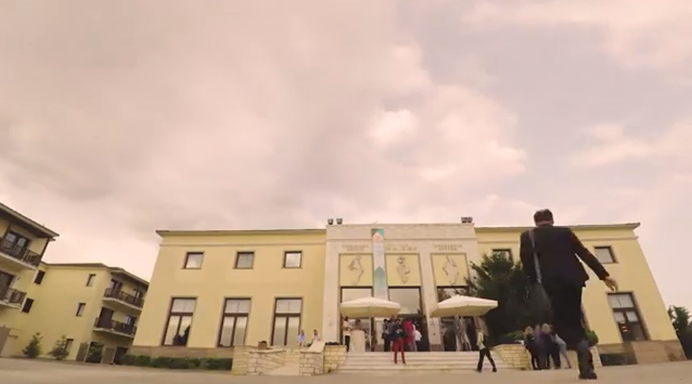
2nd EUSAIR FORUM, in Ioannina, May 2017
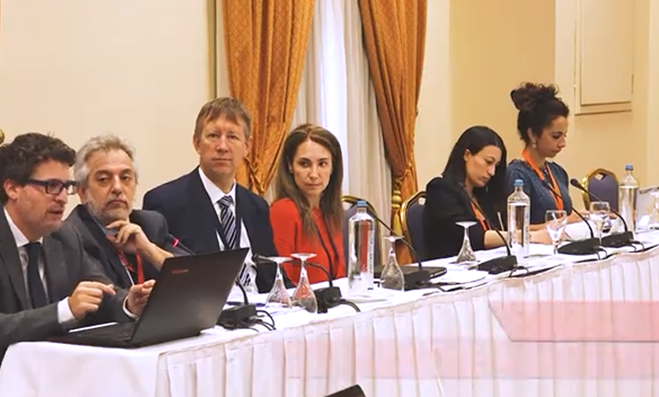
Session of Monitoring and Evaluation in 2nd EUSAIR FORUM
Through its 2024–2025 Hellenic Presidency of EUSAIR, Greece reinforced its historic role, contributing to uniting EU and non-EU countries around a shared vision: sustainable growth, connectivity, and resilience for all.
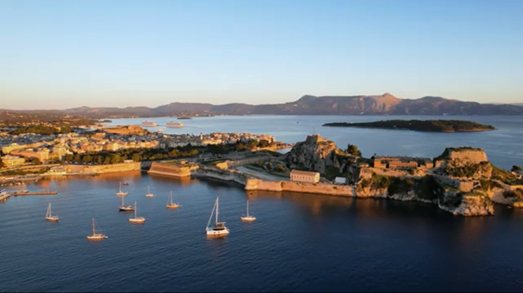
Corfu Town, where the kick off meeting of the 2nd Hellenic Presidency of EUSAIR took place
Ten years after the launch of EUSAIR, Greece stands both as a contributor to its implementation progress and as a guardian of enduring stories of macro-regional strategy. Its journey is one of measurable achievements and emotional resonance — where policy meets people, and where vision becomes action
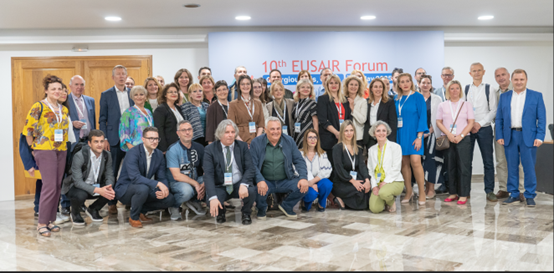
10th EUSAIR FORUM in Crete, May 2025 in Crete
Where nations meet, the EUSAIR spirit grows
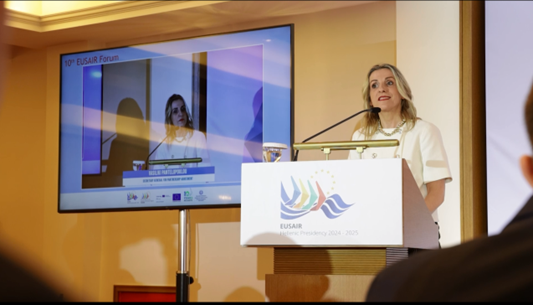
10th EUSAIR FORUM, General Secretary Ms Pantelopoulou : Building social cohesion is crucial for a strong and united community.
The 10-year milestone of EUSAIR marks not just a timeline, but a period of steady progress. For Greece, this progress has taken tangible form, turning the vision into action by inviting citizens, entrepreneurs, stakeholders, innovators and policymakers to take part in this shared transformation.
This mission comes alive through actions events, dedicated teamwork and impactful projects that translate the EUSAIR vision into reality. Step by step, each effort builds a more connected, sustainable and thriving Adriatic-Ionian region.
Enhancing the Political Debate on EUSAIR: Initiative of Hellenic Presidency to ensure an official opinion by the European Economic and Social Committee (EESC).
Under the 2nd Hellenic Presidency of EUSAIR (2024–2025), Greece played a key role to strengthen regional cooperation and political dialogue across the Adriatic-Ionian macro-region. Through the initiative “Enhancing the Political Debate on EUSAIR,” Greece presented the Strategy’s key achievements, priorities, and prospects to partners, EU institutions, and diplomatic missions, showcasing how EUSAIR’s Enhanced European Cooperation Structure acts as the backbone of effective coordination and implementation.
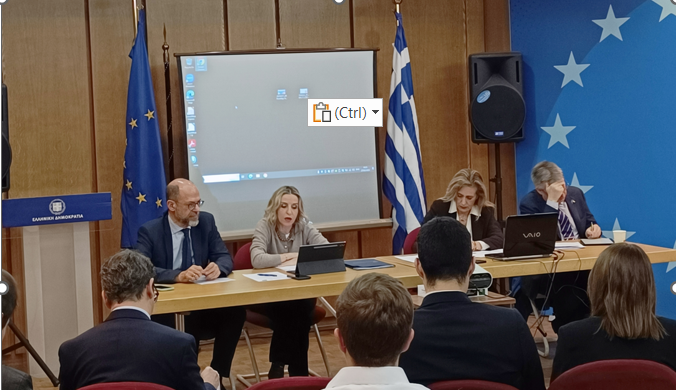
Brussels, February 2025 — At the Permanent Representation of Greece to the European Union. From left to right: Mr. J. Vraillas, Ambassador of Greece to the European Union; Ms. V. Pantelopoulou, General Secretary of the Partnership Agreement of Greece, Ministry of Economy and Finance; Ms. M. Konstantopoulou, National Coordinator for EU Funds of Greece, Ministry of Economy and Finance and Mr. M. Gilland, Head of Unit at DG REGIO, European Commission
In February of 2025, an event held by the Hellenic Presidency of the EUSAIR in Brussels, that offered a unique networking opportunity at a high political level. The presence of representatives from the EU, Greek Permanent Representation and their counterparts from EUSAIR states, enhanced the recognition of the EUSAIR’s significance.
This meeting was a moment of connection, visibility, and action. It strengthened the political commitment to EUSAIR, showing how the strategy supports the connection between European institutions with national authorities in order to promote practical and coordinated progress.
The event served as the starting point for the EUSAIR strategy to later secure an official opinion from the European Economic and Social Committee (EESC).
By opening direct communication channels at a high political level, Greece has strengthened EUSAIR’s voice within the EU policy framework.
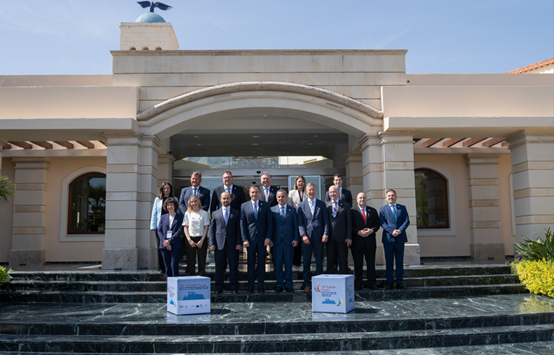
10TH EUSAIR FORUM IN CRETE – MINISTERIAL MEETING
Political involvement achieved at Ministerial Meeting.
High level involvement is crucial, for macro-regional strategies, it is important to engage national governments, local authorities, and EU institutions. High-level political participation ensures strategic direction, visibility, and long-term commitment to EUSAIR’s goals. EUSAIR aligns cross-border initiatives with national policies and EU priorities, mobilizes funding, and strengthens trust among partners. Through dialogue, collaboration, and a shared vision, high-level political commitment turns cooperation into tangible progress for the region and its communities.
EUSAIR Revised Action Plan Approved
Under the Hellenic Presidency of EUSAIR 2024–2025, the Revised EUSAIR Action Plan — the main guiding document of the Strategy — marks ten years of cooperation and sets the vision for the future of the macro-region. It aligns EUSAIR’s priorities with EU strategic goals and funding instruments, including Cohesion Policy, Interreg, Horizon Europe, LIFE, and Erasmus+. In light of these aims the existing pillars of the Strategy have been revised, adjusted and supplemented by the introduction of an additional pillar, Pillar 5 – Improved Social Cohesion.
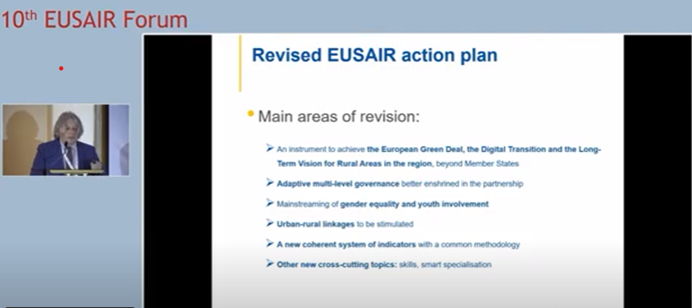
Presentation of the revised Action Plan in 10th Forum by representative of European Commission. Mr Gilles Kittel
Youth Engagement
Youth engagement has been a cornerstone of the EUSAIR strategy, and the establishment of the Youth Council marked a significant step in giving young people a voice in regional cooperation. During the Hellenic Presidency, youth Council members actively participated in events.
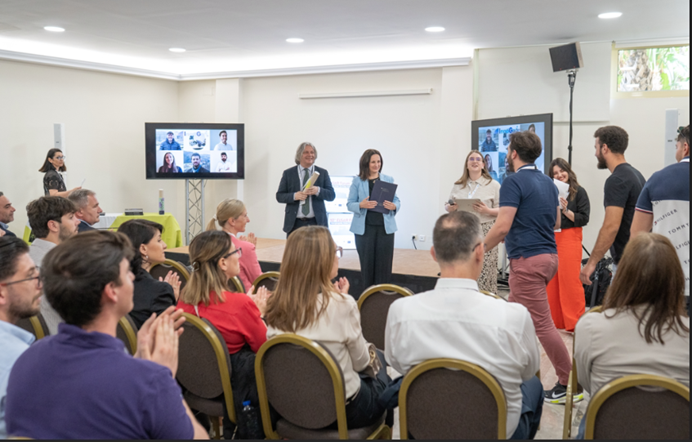
Session of youth in 10th EUSAIR FORUM”
Administrative actions such as adopting the Youth Council’s Rules of Procedure and agreeing on how to select its members, helped increase youth visibility, support their real involvement, and ensure they can actively contribute to the implementation and future development of the EUSAIR strategy.
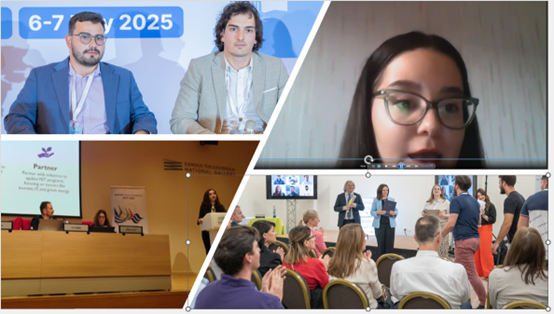
The active presence of Youth Council at all events held under the Hellenic Presidency
Young voices rise across the Adriatic-Ionian
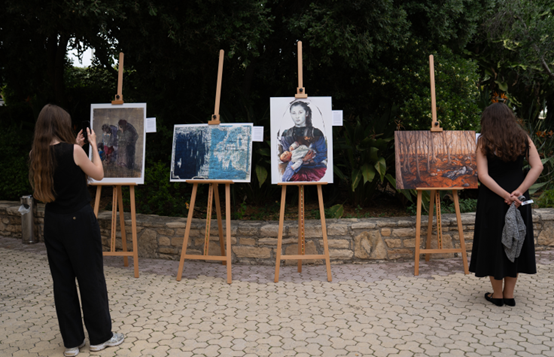
“Leaving Without Living” exhibition by young artists, 10th EUSAIR FORUM in Crete
The voice of youth is vital, especially when expressed through art, as it conveys messages that inspire change. Through creativity, young people raise awareness and call for collective action to achieve a brighter future in the macro-region.
Monitoring and Evaluation
Monitoring and Evaluation (M&E) are vital working packages of the EUSAIR Macro-Regional Strategy, ensuring accountability, learning, and evidence-based decision-making. By systematically tracking progress against defined objectives and indicators, M&E allows participants to assess whether the strategy delivers its intended results and to identify areas needing adjustment.
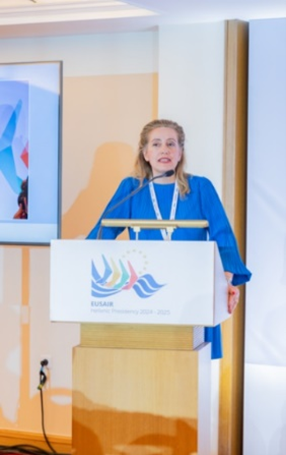
National Coordinator of EUSAIR, Ms M. Konstantopoulou at 10th EUSAIR FORUM
Evaluation demonstrates the added value of EUSAIR to both authorities and citizens. It could suggest any potential revisions of the strategy, enhances transparency, and justifies political and financial support by showcasing tangible results.
Monitoring and evaluation have evolved into dynamic processes that promote learning, transparency, and continuous improvement — ensuring that EUSAIR remains effective, relevant, and aligned with the European priorities.
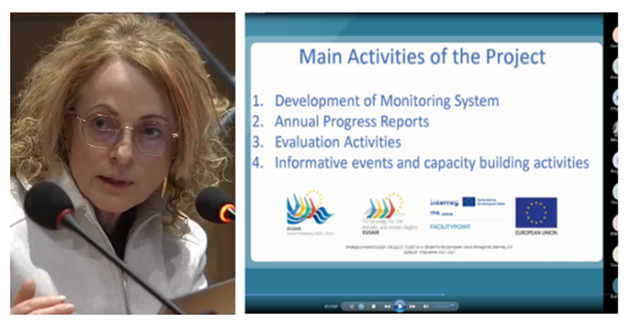
Presentation of planned activities of Monitoring and Evaluation by Ms S. Pournara EUSAIR FACILITY POINT GREECE (February 2025)
During the previous programming period Greece had completed two main activities, one regarding monitoring issues by establishing a monitoring system focusing on Pillar 1 and also gathering the monitoring systems related to the other three Pillars. Afterwards, the EUSAIR evaluation was carried out provided feedback to the partners involved and stakeholders in order to improve the planning and the implementation of the macro-regional strategy.
Greece paves the way for the Pact for Blue Skills
Greece, a nation deeply connected to the sea, continues to transform this bond into action, leading the way toward a sustainable blue future. Through its strong commitment to blue growth and innovation, Greece has played a key role in officially establishing the EU Pact for Skills within the EUSAIR Strategy, marking a step forward for the entire Adriatic-Ionian Region.
This achievement underscores the growing recognition that developing blue skills, the knowledge and competencies that support the marine and maritime sectors, are essential for fostering sustainable economic growth across the region.
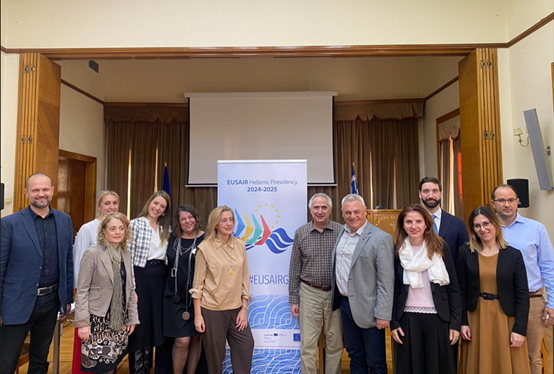
Event “Blue Skills for a Sustainable Blue Economy in the Adriatic and Ionian Region,” held on 10 December 2024 at the Piraeus Chamber of Commerce and Industry. The event, organised by the Hellenic Presidency of EUSAIR 2024–2025
IMPORTANT PROJECTS CONTRIBUTING IN EUSAIR
Greece, as a Lead Partner in several Interreg projects, plays a central role in advancing the objectives of the EU Strategy for the Adriatic-Ionian Region (EUSAIR). Projects such as BORPRES, GROWTH4BLUE, AIMPRESS, and SUPERFUEL exemplify how regional cooperation can drive innovation, sustainability, and economic development. Together, these initiatives strengthen cross-border collaboration and knowledge exchange across the Adriatic-Ionian region.
By coordinating these projects, Greece ensures that activities align with the EUSAIR pillars: Blue Growth, Connecting the Region, Environmental Quality, Sustainable Tourism and Improved Social Cohesion. The following Interreg projects, not only enhance regional capacities and innovation but also contribute directly to EUSAIR’s vision of a more integrated, sustainable, and competitive Adriatic-Ionian region, demonstrating the tangible impact of cross-border cooperation on economic, environmental, and social development.
BorPres : The border crossing point between Greece and North Macedonia at the Prespa Lake Area
Greece, as a Lead Partner in several Interreg projects, plays a central role in advancing the objectives of the EU Strategy for the Adriatic-Ionian Region (EUSAIR). Projects such as BORPRES, GROWTH4BLUE, AIMPRESS, and SUPERFUEL exemplify how regional cooperation can drive innovation, sustainability, and economic development. Together, these initiatives strengthen cross-border collaboration and knowledge exchange across the Adriatic-Ionian region.
By coordinating these projects, Greece ensures that activities align with the EUSAIR pillars: Blue Growth, Connecting the Region, Environmental Quality, Sustainable Tourism and Improved Social Cohesion. The following Interreg projects, not only enhance regional capacities and innovation but also contribute directly to EUSAIR’s vision of a more integrated, sustainable, and competitive Adriatic-Ionian region, demonstrating the tangible impact of cross-border cooperation on economic, environmental, and social development.
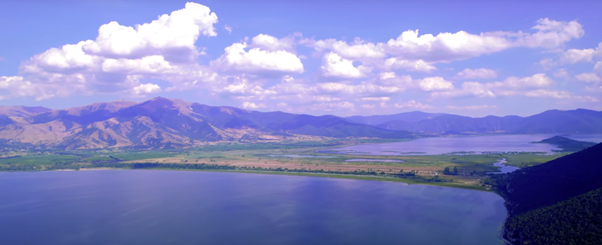
BorPres: Bridging borders, connecting people, and opening new paths for shared prosperity.“
The BorPres project marks a new chapter in cross-border cooperation between Greece and North Macedonia. Focused on the Prespes–Resen area, BorPres laid the groundwork for reopening the long-awaited Lemos–Markova Noga border crossing, by preparing all the necessary studies under the EU’s 2021–2027 programming period.
Building on this success, BorPres2, signed in February 2025, moves from planning to action. The project will upgrade infrastructure on both sides of the border, cutting travel time from two hours to just 40 minutes. It also includes the creation of a cross-border hiking trail, showcasing the region’s stunning natural beauty and promoting sustainable tourism.
Together, BorPres and BorPres2 (Interreg IPA Greece-North Macedonia 2021-2027) will revive mobility, boost local economies, and strengthen cultural ties, turning a former frontier into a bridge of friendship and shared prosperity.
GROWTH4BLUE: Innovation, Development and Specialisation for the Blue Economy of the Adriatic-Ionian Region
At the heart of the Adriatic–Ionian region, GROWTH4BLUE (Interreg IPA ADRION 2021-2027) shines as a symbol of innovation, sustainability, and collaboration in the Blue Economy. The project focuses on key maritime sectors — from transport and shipbuilding to fisheries, aquaculture, marine biotechnology, and coastal tourism — turning today’s challenges into tomorrow’s opportunities.
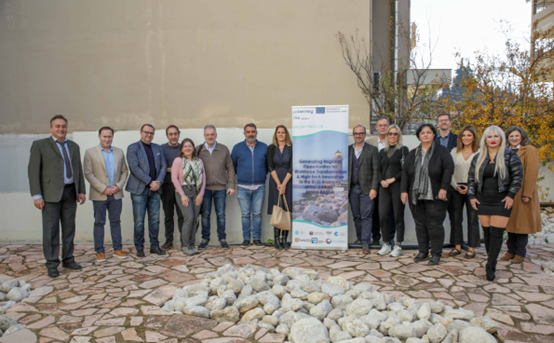
GROWTH4BLUE Officially Launched in Patras: A Strong Start for Blue Economy and Transnational Cooperation
By bridging the gap between market needs and skilled professionals, GROWTH4BLUE boosts regional competitiveness through strategic innovation and technological excellence.
AIMPRESS: Supporting a carbon neutral and better-connected Adriatic-Ionian region
The maritime industry is facing a pivotal moment, as environmental challenges demand bold and innovative solutions. AIMPRESS (Interreg IPA ADRION 2021-2027) rises to this challenge by integrating advanced technologies and sustainable practices to create cleaner, more efficient ports across the Adriatic–Ionian region. The project focuses on decarbonization, smarter energy use, and greener port management, aligning closely with EU policies for a sustainable maritime future.
By modernizing port infrastructure and operations, AIMPRESS not only reduces emissions and environmental impacts but also strengthens regional competitiveness and promotes a resilient Blue Economy. Through this initiative, the Adriatic–Ionian region demonstrates how innovation and sustainability can go hand in hand, transforming maritime transport into a driver of eco-friendly growth and regional prosperity.
SUPERALFUEL – Sustainability of Alternative fuels in the ADRION
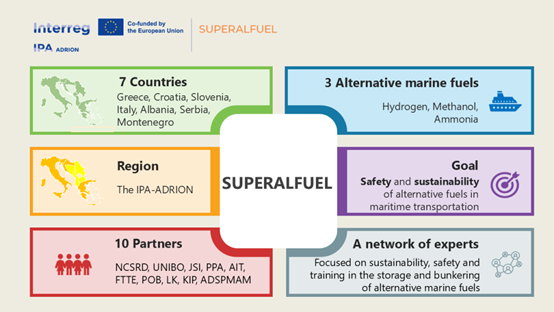
Ports are gateways of trade—but also hotspots of emissions. SUPERALFUEL (Interreg IPA ADRION 2021-2027) is transforming this reality by driving the shift toward clean, low-carbon energy across the Adriatic-Ionian region. By promoting hydrogen, ammonia, and methanol as next-generation marine fuels, the project connects innovation with sustainability.
Through cross-border cooperation, SUPERALFUEL is paving the way for greener ports, cleaner air, and smarter logistics—from ship propulsion to bunkering and last-mile transport.
Backed by the Interreg IPA ADRION 2021–2027 programme, and presented at the 10th EUSAIR Forum in Crete, SUPERALFUEL stands as a bold step toward a connected, climate-friendly maritime future for the region.
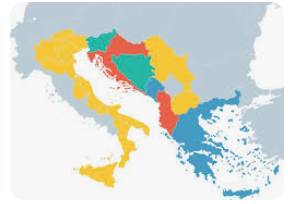
Map of participating countries in EUSAIR strategy
The diversity of EUSAIR lies not only in its ambitious goals but in the challenging combination of projects, targeted actions, and multi-level governance that converge to achieve the vision of macro-regional strategy. Each initiative, regardless of its focus, contributes a unique piece to the macro-regional puzzle. Through coordinated efforts across national, regional, and local authorities, as well as active engagement with diverse stakeholders, EUSAIR transforms these individual components into a cohesive strategy. Its mission seeks to unite diverse cultures, populations, and regional assets, creating a shared vision of prosperity, resilience and cooperation across the Adriatic-Ionian region. In this way, the strategy demonstrates how richness and complexity, when harnessed through collaboration and shared purpose, can generate a singular, impactful result for the macro-region.


